
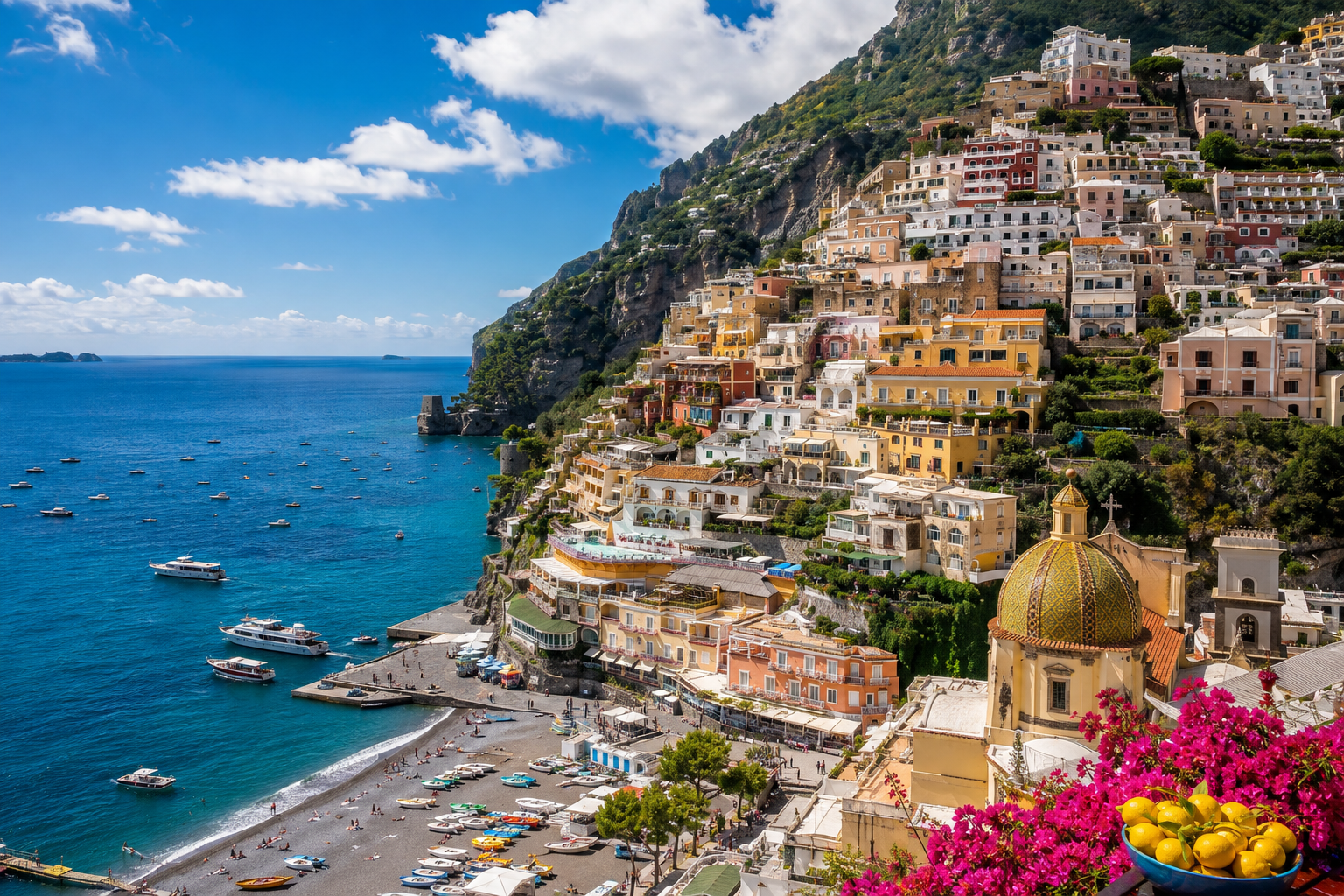
Italy is one of the most beautiful and diverse travel destinations in the world. From ancient Roman ruins and Renaissance masterpieces to dramatic coastlines, peaceful lakes, charming villages, and spectacular mountains, Italy offers something for almost every type of traveler.
Whether you are planning your first trip to Italy, a romantic getaway, a family holiday, a photography adventure, or a longer European journey, choosing where to go can be difficult. Italy has 20 regions, and each one has its own character, food, landscapes, traditions, and attractions.
This guide explores the best places to visit in Italy, including famous cities, coastal destinations, lakes, islands, mountain regions, and hidden gems. It also explains what makes each destination special and how to choose the right places for your trip.
Why Visit Italy?
Italy combines history, culture, food, art, nature, and lifestyle in a way few countries can match.
You can spend the morning exploring ancient ruins in Rome, enjoy handmade pasta for lunch, admire Renaissance art in Florence in the afternoon, and finish the evening with gelato in a historic piazza.
Italy is also remarkably varied geographically. In the north, you can find the Alps and beautiful Italian lakes. Central Italy is famous for Renaissance cities, vineyards, medieval villages, and rolling countryside. Southern Italy offers dramatic coastlines, historic towns, Mediterranean landscapes, and some of the country’s most distinctive culinary traditions.
The islands of Sicily and Sardinia add another dimension, with beaches, archaeological sites, mountains, and unique local cultures.
1. Rome
Rome is one of the best places to visit in Italy for first-time travelers.
Known as the Eternal City, Rome combines thousands of years of history with modern Italian life. Ancient monuments stand alongside busy streets, cafés, restaurants, and elegant shopping districts.
The Colosseum is one of Rome’s most famous attractions. This enormous ancient amphitheater provides a glimpse into the history of the Roman Empire. Nearby, the Roman Forum and Palatine Hill allow visitors to explore the center of ancient Roman political and public life.
Another essential attraction is the Pantheon, one of the best-preserved ancient Roman buildings.
Rome is also home to Vatican City, where visitors can see St. Peter’s Basilica, St. Peter’s Square, the Vatican Museums, and the Sistine Chapel.
Don’t forget the Trevi Fountain. Tossing a coin into the fountain has become one of Rome’s most famous travel traditions.
Rome is ideal for travelers interested in:
- Ancient history
- Architecture
- Art
- Religious heritage
- Italian food
- Shopping
- Nightlife
Allow at least three or four days to experience Rome without rushing.
2. Venice
Venice is unlike almost anywhere else in the world.
Built across a collection of islands in a lagoon, the city is famous for canals, bridges, historic palaces, and narrow streets.
The Grand Canal is the main waterway through Venice. A boat journey along the canal offers views of historic buildings and elegant palaces.
St. Mark’s Square is another essential stop. Here you can see St. Mark’s Basilica, the Doge’s Palace, and the famous bell tower.
One of the most enjoyable things to do in Venice is simply walking without a strict plan. Small bridges, quiet canals, local cafés, and hidden squares can be more memorable than famous attractions.
Visitors can also take a short boat trip to Murano, famous for glassmaking, and Burano, known for its colorful houses.
Venice is particularly beautiful during early mornings and evenings when the streets can feel much quieter.
3. Florence
Florence is one of the world’s great destinations for art and architecture.
Located in Tuscany, Florence was a major center of the Renaissance. Its historic center contains extraordinary buildings, museums, sculptures, and churches.
The Duomo of Florence dominates the city’s skyline. Its enormous dome, designed by Filippo Brunelleschi, is one of Italy’s most recognizable architectural achievements.
The Uffizi Gallery contains famous works of Renaissance art, while the Accademia Gallery is home to Michelangelo’s David.
The Ponte Vecchio, a historic bridge crossing the Arno River, is another popular landmark.
Florence is relatively compact, making it easy to explore on foot.
It is an excellent destination for:
- Art lovers
- History enthusiasts
- Couples
- Architecture fans
- Food travelers
- Photography enthusiasts
4. Milan
Milan is Italy’s modern, stylish, and business-oriented city.
It is particularly famous for fashion, design, architecture, shopping, and culture.
The Duomo di Milano is the city’s most recognizable landmark. Visitors can explore the cathedral and, when access is available, walk across its rooftop terraces for impressive views over the city.
Next to the cathedral is the elegant Galleria Vittorio Emanuele II, one of Italy’s most famous shopping arcades.
Milan is also home to Leonardo da Vinci’s famous mural The Last Supper, which requires advance planning because visitor numbers are limited.
Milan works particularly well as a starting point for exploring northern Italy.
It is also an excellent base for trips to Lake Como, Lake Maggiore, and other destinations in Lombardy.
5. Lake Como
Lake Como is one of the most beautiful lake destinations in Italy.
Surrounded by mountains and elegant villages, the lake has become famous for its spectacular scenery and historic villas.
Bellagio is one of the most popular towns. Its narrow streets, waterfront views, gardens, and restaurants make it an ideal place to explore.
Varenna offers another charming experience, with colorful buildings and beautiful views across the water.
Boat trips are one of the best ways to experience Lake Como. From the lake, you can see mountains, villages, gardens, and historic properties from a different perspective.
Lake Como is especially popular with couples, photographers, nature lovers, and travelers looking for a relaxing escape.
6. Amalfi Coast
The Amalfi Coast is one of Italy’s most spectacular coastal regions.
The coastline is famous for steep cliffs, colorful villages, blue Mediterranean water, lemon trees, and winding roads.
Positano is perhaps the most recognizable town, with houses appearing to climb the mountainside above the sea.
Amalfi provides another beautiful base, while Ravello sits higher above the coast and offers extraordinary views.
The Amalfi Coast is ideal for scenic drives, boat trips, swimming, photography, restaurants, and romantic holidays.
Because the roads can become extremely busy during peak periods, travelers should plan transportation carefully.
7. Naples
Naples is energetic, historic, and unmistakably Italian.
The city is famous around the world for Neapolitan pizza, but food is only one reason to visit.
Naples has a fascinating historic center filled with churches, narrow streets, traditional shops, cafés, and historic buildings.
It is also an excellent base for exploring nearby archaeological sites.
From Naples, travelers can visit Pompeii, the ancient Roman city preserved by the eruption of Mount Vesuvius.
Naples can feel more chaotic than cities such as Florence or Venice, but that energy is part of its character.
It is an excellent choice for travelers who want authentic food, history, street life, and access to southern Italy.
8. Cinque Terre
Cinque Terre is one of Italy’s most photogenic destinations.
The name means “Five Lands” and refers to five historic coastal villages:
- Monterosso al Mare
- Vernazza
- Corniglia
- Manarola
- Riomaggiore
The villages are surrounded by dramatic cliffs and vineyards overlooking the Ligurian Sea.
Hiking between the villages can be a wonderful experience, although trail conditions and closures should always be checked before setting out.
Train services also connect the villages, making it possible to explore the area without a car.
Cinque Terre is particularly attractive to photographers, hikers, couples, and travelers who enjoy small coastal communities.
9. The Dolomites
For mountain lovers, the Dolomites are among the best places to visit in Italy.
Located in northeastern Italy, this mountain region is famous for dramatic limestone peaks, alpine meadows, forests, lakes, and charming mountain villages.
The landscape changes dramatically throughout the year.
Summer is excellent for hiking and sightseeing, while winter attracts visitors for skiing and snow activities.
Some of the most popular areas include Cortina d’Ampezzo, Tre Cime di Lavaredo, and the surrounding mountain valleys.
The Dolomites are also one of Italy’s best destinations for landscape photography.
10. Tuscany
Tuscany is more than Florence.
The wider region is famous for rolling hills, vineyards, olive groves, medieval towns, historic estates, and beautiful countryside.
The Val d’Orcia is particularly famous for its postcard-like landscapes.
Popular destinations include:
- Siena
- San Gimignano
- Pienza
- Montepulciano
- Lucca
- Pisa
A road trip through Tuscany can be an unforgettable way to experience the region.
Travelers can combine historic towns with countryside stays, local food, wine regions, and scenic drives.
11. Bologna
Bologna is often overlooked by first-time visitors, but it is one of Italy’s most rewarding cities.
The city is famous for its food, especially traditional pasta dishes and regional cuisine.
Bologna’s historic center is characterized by long covered walkways known as porticoes.
The city also has a strong university tradition and a lively atmosphere.
For travelers who want excellent Italian food without focusing exclusively on the country’s most famous tourist attractions, Bologna is a fantastic choice.
12. Verona
Verona is one of northern Italy’s most charming cities.
It is strongly associated with Shakespeare’s Romeo and Juliet, although the historical connection is largely literary rather than factual.
The city is also home to a remarkably preserved Roman arena that continues to host performances.
Its historic center features elegant squares, bridges, churches, cafés, and medieval architecture.
Verona works well as a short city break or as part of a northern Italy itinerary.
13. Lake Garda
Lake Garda is Italy’s largest lake and offers a wide variety of experiences.
Visitors can enjoy mountain scenery, lakeside towns, water sports, cycling, hiking, and boat trips.
Popular destinations include Sirmione, Riva del Garda, and Malcesine.
Sirmione is particularly famous for its historic center and castle.
Lake Garda is a good choice for families because it combines outdoor activities with attractions and easy access to several towns.
14. Sicily
Sicily is Italy’s largest island and one of the country’s most diverse destinations.
The island combines ancient history, beautiful beaches, dramatic mountains, traditional villages, and distinctive cuisine.
Palermo is a fascinating starting point, with historic markets, churches, palaces, and Mediterranean influences.
Taormina is famous for its beautiful location above the sea and its ancient Greek theater.
Mount Etna, Europe’s largest active volcano, is another major attraction.
Sicily is particularly rewarding for travelers who have enough time to explore beyond one city.
15. Sardinia
Sardinia is famous for spectacular beaches and clear Mediterranean water.
The island is an excellent destination for travelers looking for relaxation, swimming, snorkeling, boating, and coastal scenery.
The Costa Smeralda is known for its beautiful coastline and upscale resorts.
However, Sardinia also has historic towns, archaeological sites, mountain landscapes, and traditional villages.
A longer trip allows visitors to experience both the famous beaches and the island’s cultural side.
16. Turin
Turin is an elegant northern Italian city surrounded by the Alps.
It is famous for grand boulevards, historic cafés, museums, and architecture.
The city is also closely associated with Italian chocolate and the development of famous coffee traditions.
Turin is a good destination for travelers who want something different from Rome, Florence, and Venice.
Its location also makes it an excellent base for exploring parts of Piedmont.
17. Pisa
Pisa is most famous for its Leaning Tower.
Located in the Piazza dei Miracoli, the tower is part of a remarkable architectural complex that also includes the cathedral and baptistery.
Pisa can be visited as a day trip from Florence, but travelers with more time can explore its streets, riverfront, cafés, and historic center.
18. Siena
Siena is one of Tuscany’s most beautiful medieval cities.
Its historic center is centered around Piazza del Campo, one of Italy’s most famous public squares.
Siena is also known for the Palio, a historic horse race held in the square.
The city is an excellent destination for travelers who want medieval architecture, traditional Tuscan culture, and a slower atmosphere.
19. Matera
Matera is one of the most unusual destinations in Italy.
Located in Basilicata, the city is famous for its ancient cave dwellings known as the Sassi.
The historic area is built into the rocky landscape, creating a dramatic urban environment unlike most other Italian cities.
Matera is particularly impressive at sunrise and sunset, when the stone buildings take on warm colors.
It is a fantastic destination for history lovers, photographers, and travelers searching for something less conventional.
20. Puglia
Puglia occupies the heel of Italy’s boot and is famous for whitewashed towns, olive groves, beautiful coastlines, and distinctive architecture.
Alberobello is particularly famous for its trulli, traditional stone houses with conical roofs.
Other popular destinations include Ostuni, Polignano a Mare, Lecce, and Monopoli.
Puglia is a great destination for a road trip because villages, beaches, countryside, and food experiences can easily be combined.
21. Lake Maggiore
Lake Maggiore is another beautiful northern Italian lake.
It stretches across northern Italy and into Switzerland.
One of its most famous attractions is the Borromean Islands, particularly Isola Bella and Isola Madre.
The lake is less internationally famous than Lake Como but offers equally impressive scenery and can provide a quieter experience.
22. Genoa
Genoa is an important historic port city on the Ligurian coast.
Its maritime history is reflected in its architecture, museums, harbor, and historic streets.
The city is also associated with pesto, one of Italy’s most famous foods.
Genoa is an excellent base for exploring the Ligurian coastline and nearby destinations.
23. Lucca
Lucca is a charming Tuscan city surrounded by remarkably well-preserved Renaissance walls.
Visitors can walk or cycle along the top of the walls while enjoying views of the city.
Inside the walls, travelers will find historic churches, peaceful squares, cafés, and narrow streets.
Lucca is less overwhelming than some of Italy’s larger tourist cities and is ideal for a relaxed day or weekend.
24. Perugia
Perugia is the capital of Umbria and a beautiful hilltop city.
It has a strong medieval character, historic buildings, churches, and panoramic views.
Umbria is sometimes called the “green heart of Italy” because of its landscapes and countryside.
Perugia is an excellent option for travelers interested in Italian history and culture but looking for alternatives to Tuscany’s busiest destinations.
25. Assisi
Assisi is best known as the birthplace of St. Francis.
The Basilica of Saint Francis is the city’s most important attraction and a major pilgrimage destination.
Beyond its religious significance, Assisi has beautiful medieval streets, stone buildings, panoramic views, and a peaceful atmosphere.
It can easily be combined with other destinations in Umbria.
26. Capri
Capri is a glamorous island in the Bay of Naples.
It is famous for dramatic cliffs, beautiful coastal scenery, elegant streets, and luxury hotels.
The Blue Grotto is one of its most famous attractions.
Capri is often visited as a day trip from Naples or the Amalfi Coast, but staying overnight allows travelers to experience the island after many day visitors have left.
27. Ischia
Ischia is another island in the Bay of Naples.
Compared with Capri, it is generally associated more strongly with thermal springs, gardens, beaches, and relaxation.
It is a good option for travelers who want an island experience without focusing entirely on luxury and glamour.
28. San Gimignano
San Gimignano is one of Tuscany’s most recognizable medieval towns.
Its historic skyline is famous for stone towers that rise above the town.
The town is small enough to explore on foot and makes an excellent addition to a Tuscany road trip.
Its surrounding countryside also provides beautiful views and photography opportunities.
29. Como and Northern Lombardy
The city of Como is an excellent gateway to Lake Como and northern Lombardy.
Visitors can explore its historic center, waterfront, cathedral, and surrounding mountains.
From Como, it is easy to continue by boat or train toward other lake destinations.
The region is particularly convenient for travelers combining Milan with a lake holiday.
30. The Italian Alps
Beyond the Dolomites, the wider Italian Alps offer countless opportunities for adventure.
Mountain towns and valleys provide hiking, skiing, cycling, climbing, and scenic experiences.
During summer, alpine lakes and hiking trails become especially attractive. During winter, ski resorts welcome visitors from around the world.
The Italian Alps are ideal for travelers who want to combine Italy’s famous food and culture with outdoor adventure.
Best Places in Italy for Different Types of Travelers
Italy is so diverse that the best destination depends on what you want from your holiday.
Best for first-time visitors
Rome, Florence, and Venice are the classic choices.
They provide an excellent introduction to Italian history, art, architecture, culture, and food.
Best for couples
Consider:
- Amalfi Coast
- Lake Como
- Venice
- Tuscany
- Capri
These destinations combine beautiful scenery, romantic restaurants, historic towns, and memorable experiences.
Best for beaches
For a beach-focused holiday, consider:
- Sardinia
- Sicily
- Puglia
- Amalfi Coast
- Capri
- Ischia
Best for mountains
The Dolomites and Italian Alps are outstanding choices.
Best for history
Rome is difficult to beat, but Sicily, Naples, Pompeii, Florence, Matera, and Verona also offer extraordinary historical experiences.
Best for food
Italy is famous for regional cuisine, so almost every part of the country offers something special.
Bologna and Emilia-Romagna are particularly famous for food, while Naples is the home of Neapolitan pizza and Sicily and Puglia offer distinctive southern Italian cuisine.
Best Time to Visit Italy
Italy can be visited throughout the year, but the best time depends on your destination and activities.
Spring
Spring is an excellent time to explore cities and countryside.
Temperatures are generally comfortable, landscapes are green, and many destinations are less crowded than during the peak summer season.
Summer
Summer is popular for coastal destinations, islands, and mountain areas.
However, major cities can become very hot and crowded, especially during July and August.
If you travel during summer, consider starting sightseeing early in the morning and taking breaks during the hottest part of the day.
Autumn
Autumn is one of the most attractive seasons for food and countryside travel.
Tuscany, Piedmont, Umbria, and other rural regions can be especially beautiful.
Winter
Winter is ideal for skiing in the Alps and Dolomites.
Cities such as Rome, Florence, and Venice can also be rewarding during the colder months, particularly for travelers who prefer fewer crowds.
How Long Should You Spend in Italy?
The ideal length of an Italy trip depends on how much you want to see.
5 days
Choose one major city and explore it properly.
Rome is an excellent choice.
7 days
Consider:
Rome → Florence → Venice
This gives you a classic introduction to Italy, although the schedule will be fairly busy.
10 days
You could combine:
Rome → Florence/Tuscany → Venice → Milan/Lake Como
14 days
Two weeks gives you much more flexibility.
You could explore:
Rome → Naples/Amalfi Coast → Florence/Tuscany → Venice → Lake Como
Alternatively, focus on southern Italy or northern Italy rather than trying to cover the entire country.
Three weeks or more
With three weeks, you can combine several regions and travel at a more relaxed pace.
You could include major cities, countryside, lakes, and coastal destinations without spending every day moving between hotels.
Italy Travel Tips
Don’t try to see everything
One of the biggest mistakes first-time visitors make is attempting to visit too many destinations.
Italy rewards slow travel.
Instead of spending one night in six cities, consider staying three nights in two or three destinations and taking day trips.
Use trains between major cities
Italy has an extensive rail network connecting many major destinations.
High-speed trains can make journeys between cities such as Rome, Florence, Bologna, Milan, and Naples much easier.
For smaller villages and countryside destinations, renting a car can sometimes be more convenient.
Book major attractions in advance
Popular attractions can become extremely busy.
For major museums, famous monuments, and other attractions with limited admission, advance reservations are often a good idea.
Learn a few Italian phrases
You don’t need to speak fluent Italian, but basic expressions can make everyday interactions more enjoyable.
Useful phrases include:
- Buongiorno — Good morning
- Grazie — Thank you
- Per favore — Please
- Scusa — Excuse me
- Quanto costa? — How much does it cost?
- Dov’è…? — Where is…?
Eat regional food
Italy doesn’t have one single cuisine.
Food changes dramatically from region to region.
Try local specialties wherever you travel rather than ordering the same dishes everywhere.
Italy Travel Itinerary Ideas
Classic Italy: 7 Days
Day 1–2: Rome
Day 3–4: Florence
Day 5: Tuscany
Day 6–7: Venice
This itinerary is fast-paced but covers several of Italy’s most famous destinations.
Northern Italy: 10 Days
Milan → Lake Como → Verona → Venice → Dolomites
This route combines fashion, lakes, historic cities, canals, and mountains.
Southern Italy: 10 Days
Naples → Pompeii → Amalfi Coast → Capri → Puglia
This itinerary focuses on food, history, beaches, coastal scenery, and southern Italian culture.
Sicily: 10 Days
Palermo → Agrigento → Syracuse → Noto → Taormina → Mount Etna
Sicily deserves more than a quick visit because the island has so many different landscapes and historical sites.
What Makes Italy Special?
Italy’s greatest attraction may not be a particular monument or city.
It is the combination of experiences.
You can walk through a medieval street in the morning, visit a Renaissance museum in the afternoon, enjoy a long Italian meal in the evening, and finish the day watching the sunset over a historic square.
In another part of the country, you can wake up beside a mountain lake, hike through the Alps, or spend the afternoon swimming in the Mediterranean.
Italy also offers an extraordinary concentration of cultural heritage. Ancient Roman history, Renaissance art, medieval architecture, religious traditions, regional festivals, music, fashion, and food are woven into everyday life.
Final Thoughts
Italy is not simply a destination to visit once and check off a list. It is a country that can be explored repeatedly, with every trip revealing something different.
For your first journey, Rome, Florence, and Venice provide an unforgettable introduction to Italian culture and history.
For romance, Lake Como and the Amalfi Coast are exceptional.
For beaches, consider Sardinia, Sicily, or Puglia.
For mountains and outdoor adventures, the Dolomites and Italian Alps are hard to beat.
For food lovers, destinations such as Bologna, Naples, Sicily, and Tuscany offer extraordinary culinary experiences.
And if you want to escape the busiest tourist routes, explore places such as Matera, Umbria, Puglia, Lucca, or the smaller towns of Tuscany.
The best Italy itinerary is not necessarily the one with the most destinations. It is the one that gives you enough time to slow down, enjoy the food, explore the streets, meet people, appreciate the scenery, and experience the unique character of each region.
From ancient Rome to the canals of Venice, from the hills of Tuscany to the beaches of Sardinia and the peaks of the Dolomites, Italy offers an extraordinary variety of experiences.
Italy is a country where the journey itself becomes part of the adventure—and that is exactly why it remains one of the world’s most unforgettable travel destinations.